
Many Airbnb hosts don’t fear difficult guests nearly as much as they fear bad reviews.
Because in short-term rentals, one review can feel emotionally bigger than the stay itself.
A single guest opinion can appear to affect:
- visibility
- rankings
- booking momentum
- pricing power
- future trust
Even hosts with strong performance often feel emotionally fragile around reviews.
Not because they’re inexperienced.
But because the business itself is deeply tied to perception.
Reviews Feel Personal in Short-Term Rentals
Unlike many businesses, short-term rentals are highly public and emotionally exposed.
Guests are not only reviewing:
- the property
- the cleanliness
- the amenities
They’re also indirectly evaluating:
- the host
- the operation
- the experience created behind the scenes
That makes reviews feel personal.
Especially for hosts who invest heavily into:
- hospitality
- communication
- guest comfort
- emotional experience
When a negative review appears, it rarely feels like neutral feedback.
It feels emotional.
Platforms Intensify Review Anxiety
Part of the pressure comes from how platform systems operate.
Hosts know reviews influence:
- search visibility
- guest trust
- conversion rates
- pricing flexibility
- overall performance momentum
That creates a psychological dynamic where every stay can begin feeling high-stakes.
Even minor guest dissatisfaction may feel threatening because hosts worry:
- “Will this hurt future bookings?”
- “Will this affect rankings?”
- “Will guests stop trusting the listing?”
Over time, that uncertainty creates emotional strain.
Fear Quietly Changes Hosting Behavior
Review anxiety doesn’t only affect emotions.
It also changes operational behavior.
Hosts operating in fear often become:
- overly reactive
- excessively accommodating
- hesitant to enforce boundaries
- emotionally dependent on guest approval
They may:
- tolerate unreasonable behavior
- overcompensate during small issues
- panic over minor guest signals
- constantly monitor communication for signs of dissatisfaction
The business slowly shifts from confident hospitality into emotional damage control.
Emotional Fragility Creates Constant Pressure
One of the hardest parts of review anxiety is that the stress rarely disappears completely.
Even after positive stays, many hosts remain mentally alert:
- waiting for reviews to post
- analyzing guest tone
- worrying about private dissatisfaction
- anticipating criticism that may never come
The business begins feeling emotionally unstable.
Not because performance is failing.
But because validation always feels temporary.
Strong Systems Reduce Review Fear
Interestingly, hosts with the least review anxiety are not always the hosts with perfect reviews.
They’re usually the hosts with:
- stronger operational systems
- clearer guest expectations
- better positioning
- more emotionally stable businesses overall
They trust:
- the consistency of the experience
- the alignment of their guests
- the resilience of their operation
That confidence changes how reviews are emotionally processed.
Feedback still matters.
But it stops feeling catastrophic.
Expectation Alignment Creates Stability
One of the biggest drivers of review stress is unpredictability.
When guest expectations feel unclear, every booking can feel emotionally risky.
But when listings clearly communicate:
- who the stay is for
- what experience guests should expect
- how the property realistically feels
guest satisfaction becomes more consistent.
And consistency reduces emotional volatility for the host.
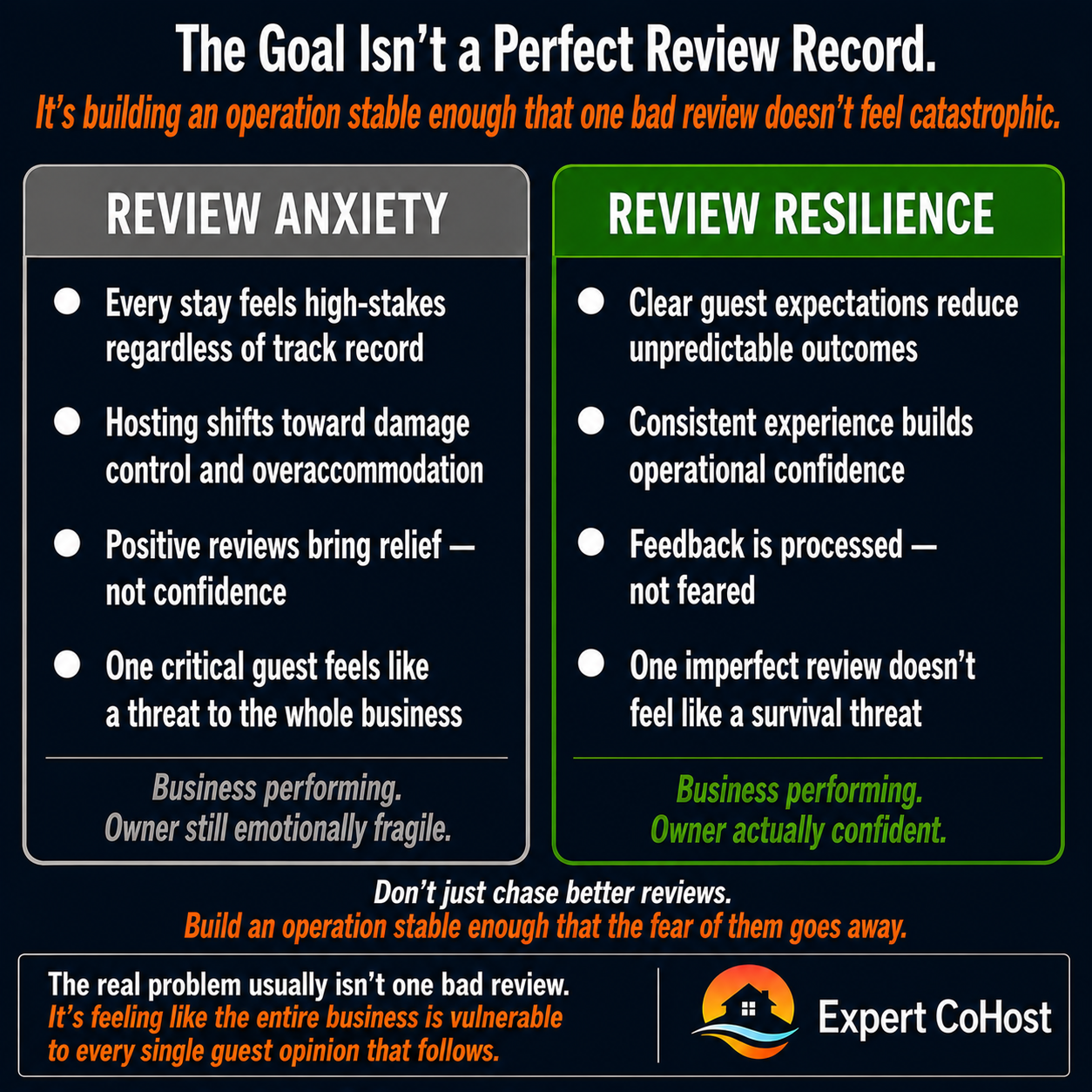
The Goal Isn’t Perfection
Many hosts quietly chase impossible emotional security through perfect reviews.
But perfection rarely creates long-term stability.
Because no hospitality business can fully eliminate:
- subjectivity
- personality differences
- occasional disappointment
- unpredictable guest behavior
The goal is not to remove all negative feedback forever.
The goal is to build an operation emotionally stable enough that one imperfect review no longer feels like a threat to survival.
The Real Shift
Reviews matter deeply in short-term rentals.
But when hosts operate in constant fear of them, the business itself becomes emotionally exhausting to sustain.
Because the real problem usually isn’t one bad review.
It’s the feeling that the entire business is emotionally vulnerable to every single guest opinion that follows.