
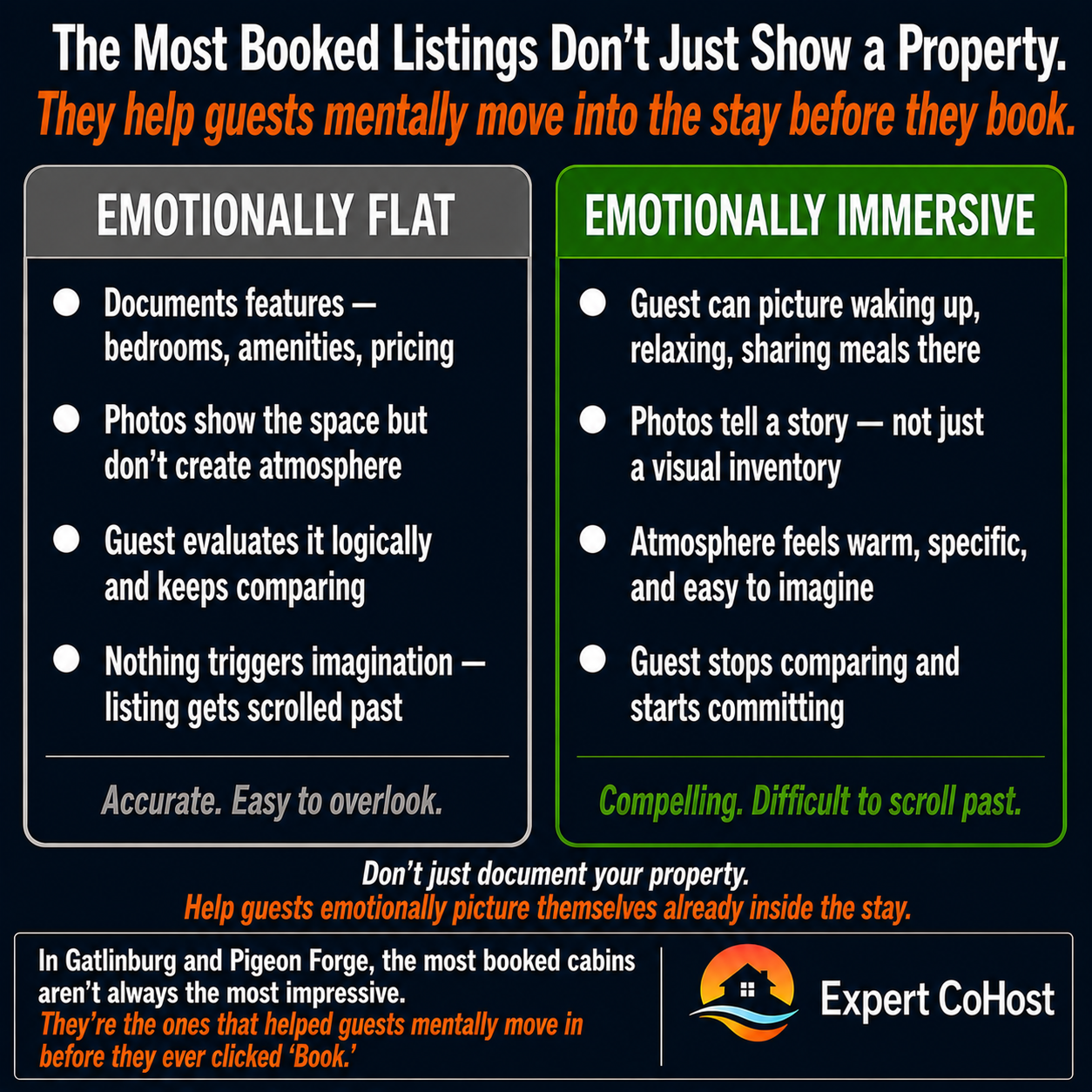
Most Airbnb guests don’t book purely based on logic.
They don’t simply compare:
- square footage
- amenities
- pricing
- location
and then select the mathematically “best” option.
Something much more emotional happens during the browsing process.
Certain listings trigger imagination.
Guests can suddenly picture:
- waking up there
- drinking coffee on the balcony
- cooking dinner with family
- relaxing after a long hike
- spending meaningful time together inside the space
And once that emotional picture forms, the listing becomes dramatically more compelling.
Guests Don’t Only Browse Listings — They Mentally Enter Them
The strongest Airbnb listings create emotional immersion.
Guests stop looking at the property from the outside.
Instead, they begin mentally experiencing life inside it.
That shift matters enormously.
Because once guests emotionally imagine themselves already there, the decision starts feeling less theoretical and more personal.
The stay begins feeling real.
Emotional Imagination Drives Booking Momentum
People naturally move toward experiences they can emotionally picture clearly.
That’s why some listings immediately feel:
- inviting
- calming
- exciting
- memorable
- emotionally complete
while others feel forgettable despite having similar amenities.
The difference is often not functionality.
It’s emotional visualization.
Guests want to mentally step into the experience before committing financially to it.
Atmosphere Matters More Than Hosts Realize
Many hosts focus heavily on documenting features.
And features absolutely matter.
But guests often respond more strongly to atmosphere than specifications alone.
They subconsciously ask:
- “Can I imagine relaxing here?”
- “Would this trip feel emotionally good?”
- “Can I picture the kind of experience I want happening in this space?”
That emotional reaction strongly shapes desire.
Great Listings Create Emotional Scenes
The most effective listings quietly help guests imagine moments.
Not through exaggerated marketing.
But through emotional clarity.
Guests can already picture:
- slow mornings
- cozy evenings
- meaningful conversations
- peaceful routines
- emotional comfort during the trip
That mental imagery creates emotional attachment before booking even happens.
Guests Want to Feel the Experience Before Arrival
One of the biggest hidden drivers of conversion is emotional familiarity.
When guests can clearly imagine:
- how the stay will feel
- how they’ll move through the space
- what the atmosphere will be like
- how emotionally easy the trip might feel
the booking decision becomes psychologically safer.
Uncertainty decreases.
Emotional comfort increases.
And confidence builds naturally.
Listings That Feel Emotionally Flat Struggle More
Some properties technically check every box:
- clean
- updated
- well-located
- competitively priced
Yet they still feel difficult to emotionally connect with.
Why?
Because the listing never helps guests emotionally enter the experience.
The space may look functional.
But it doesn’t feel alive in the guest’s imagination.
Without emotional immersion, the listing becomes easier to skip past during comparison browsing.
Visual Flow Shapes Emotional Connection
Photos play a major role in this process.
Not just because of image quality.
But because visual flow influences emotional storytelling.
Guests subconsciously absorb:
- lighting
- warmth
- openness
- comfort
- spatial flow
- emotional atmosphere
They begin imagining:
- themselves sitting there
- moving through the rooms
- sharing time with others inside the space
That emotional projection creates momentum toward booking.
Strong Positioning Makes Imagination Easier
Emotionally immersive listings usually communicate:
- who the stay is for
- what kind of experience it offers
- what emotional tone the property creates
That clarity helps guests quickly decide:
“This feels like my kind of trip.”
And once that emotional alignment happens, the listing becomes easier to commit to.
The Most Powerful Listings Feel Experienced Before Arrival
Interestingly, guests often emotionally experience a property long before they physically arrive.
The listing itself creates:
- anticipation
- emotional expectation
- imagined memories
- psychological attachment
That emotional pre-experience becomes part of the booking decision.
Because guests are not only reserving accommodations.
They’re reserving the version of the experience they’ve already started imagining in their minds.
The Real Shift
Most hosts focus heavily on improving the property itself.
But many booking decisions are shaped by something less obvious.
Whether the listing helps guests emotionally picture themselves already inside the stay.
Because in short-term rentals, the most compelling listings don’t simply show a property.
They help guests mentally move into the experience before they ever click “Book.”