
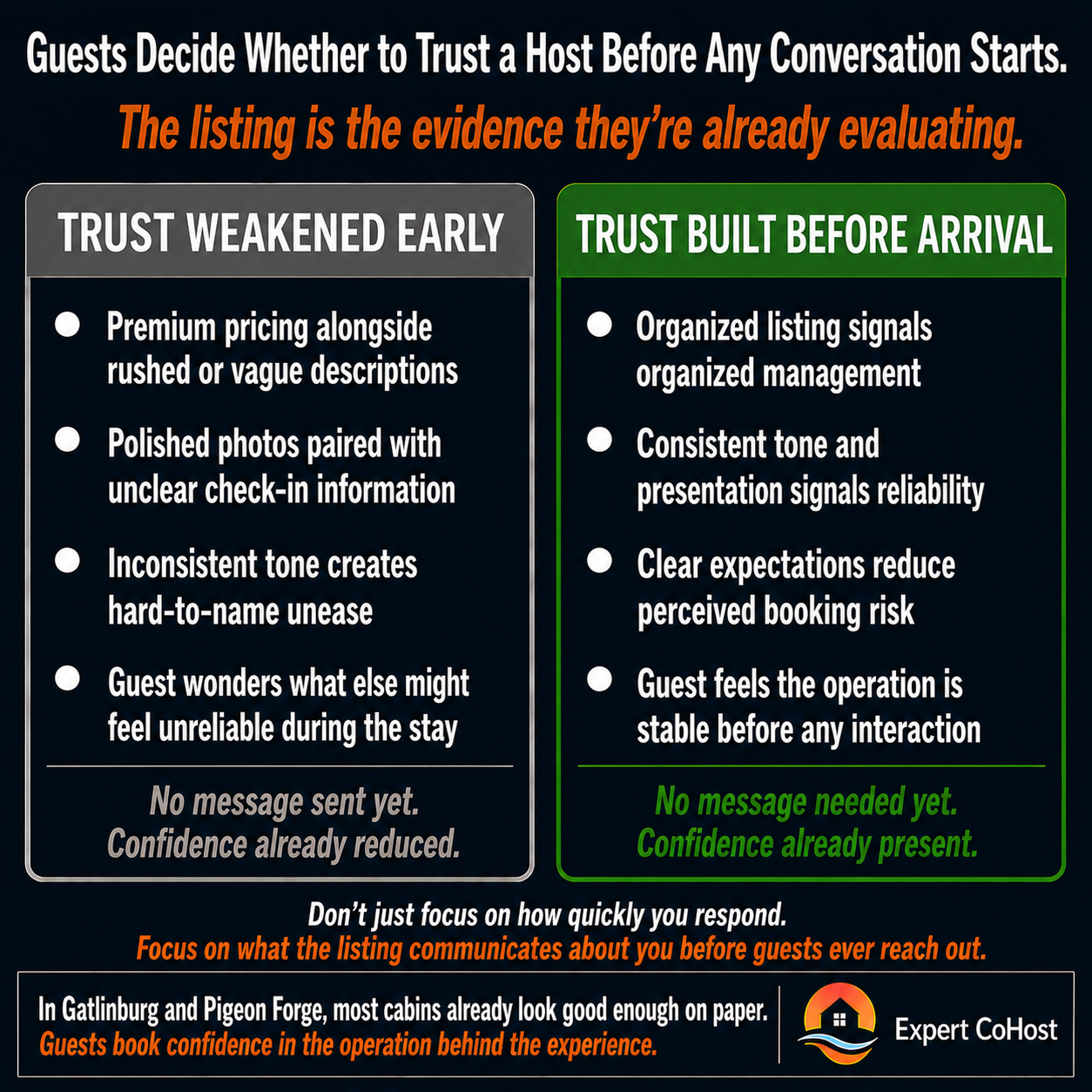
Most Airbnb hosts believe trust is built through communication.
Fast replies.
Helpful messages.
Smooth support during the stay.
And those things absolutely matter.
But guests often begin trusting — or distrusting — a host much earlier than that.
Before the first message.
Before check-in.
Sometimes before they even reach the reviews.
Because guests don’t only evaluate the property itself.
They evaluate the person or operation behind it.
The Listing Becomes a Reflection of the Host
Guests naturally treat the listing as a proxy for the host experience.
They subconsciously assume:
- organized listings reflect organized management
- clear communication reflects responsiveness
- thoughtful presentation reflects attention to detail
- consistency reflects reliability
In other words, the listing itself becomes evidence of how the stay will likely be managed.
That emotional judgment happens quickly.
And often automatically.
Guests Are Evaluating Risk
Booking a short-term rental involves uncertainty.
Guests are staying in:
- unfamiliar spaces
- unfamiliar locations
- environments they haven’t physically seen yet
So part of the booking decision becomes emotional risk assessment.
Guests quietly wonder:
- “Will this host handle problems well?”
- “Will communication be difficult?”
- “Will the actual stay match expectations?”
- “Will this feel stressful if something goes wrong?”
Trust is often less about perfection and more about reducing perceived uncertainty.
Operational Signals Shape Emotional Confidence
Guests pick up on operational signals constantly.
Even subtle ones.
Things like:
- clear check-in explanations
- cohesive listing structure
- thoughtful descriptions
- organized photos
- emotionally calm presentation
- consistent tone throughout the listing
all communicate stability.
And stability creates reassurance.
Guests don’t consciously analyze every detail.
But they absorb the overall feeling those details create.
Inconsistency Quietly Weakens Trust
Trust tends to weaken when the experience feels fragmented.
For example:
- polished photos paired with vague descriptions
- premium pricing with rushed communication
- strong branding with unclear expectations
- luxury positioning with inconsistent presentation
These mismatches create subconscious doubt.
Not necessarily enough to stop every booking.
But enough to reduce confidence.
Because when details don’t align, guests start questioning what else may feel unreliable during the stay.
Guests Want Predictability
One of the biggest drivers of trust is predictability.
Guests feel safer booking when they believe:
- expectations are clear
- the experience feels stable
- communication will feel smooth
- problems will likely be handled professionally
That emotional safety matters more than many hosts realize.
Especially in a crowded market where multiple listings already appear “good enough.”
Trust Shapes Guest Behavior During the Stay
Interestingly, guest trust doesn’t just affect conversion.
It also changes how guests behave after booking.
Guests who feel confident beforehand often:
- communicate more calmly
- arrive with more aligned expectations
- interpret small issues more reasonably
- feel less anxious throughout the stay
That emotional foundation affects the entire guest experience.
Strong Hosts Feel Intentional Before Arrival
The hosts guests trust most often create a feeling of intentionality.
Nothing feels random.
The:
- listing presentation
- communication tone
- expectations
- operational structure
all reinforce the same emotional message:
“This experience feels stable, thoughtful, and professionally handled.”
That consistency creates confidence long before direct interaction happens.
The Real Shift
Most hosts focus heavily on what happens after the guest reaches out.
But trust often begins much earlier than that.
Because guests don’t simply book properties.
They book confidence in the people and systems behind the experience.
And in many cases, that confidence is formed before a single interaction ever takes place.