
Most Airbnb hosts think the guest experience starts at check-in.
When the guest opens the door.
Sees the property.
Begins the stay for the first time.
But in reality, something important happens much earlier than that.
By the time guests arrive, they’ve already built a mental picture of what they believe the experience will feel like.
And those expectations shape far more than most owners realize.
Guests Never Arrive Emotionally Neutral
Guests don’t arrive at a property objectively evaluating it from scratch.
They arrive carrying assumptions.
About:
- cleanliness
- comfort
- organization
- responsiveness
- stress level
- emotional atmosphere
- overall quality of the stay
Those assumptions begin forming while they browse the listing itself.
Long before check-in instructions are ever sent.
The Listing Quietly Teaches Guests What to Expect
Every part of a listing influences guest perception.
Not just:
- pricing
- amenities
- reviews
But also:
- photo quality
- visual consistency
- tone of communication
- clarity of information
- emotional presentation
Guests subconsciously interpret these details as signals about what the actual experience will probably feel like.
That interpretation becomes the foundation of expectation.
Guests Build Mental Narratives Before Booking
While browsing, guests naturally imagine:
- how smooth the stay will feel
- whether the property will feel relaxing
- how responsive the host might be
- whether problems are likely to happen
- whether the experience feels trustworthy and easy
That mental story begins forming before the booking decision is even complete.
And once guests emotionally commit to that narrative, it becomes surprisingly powerful.
Expectations Shape How Guests Interpret the Stay
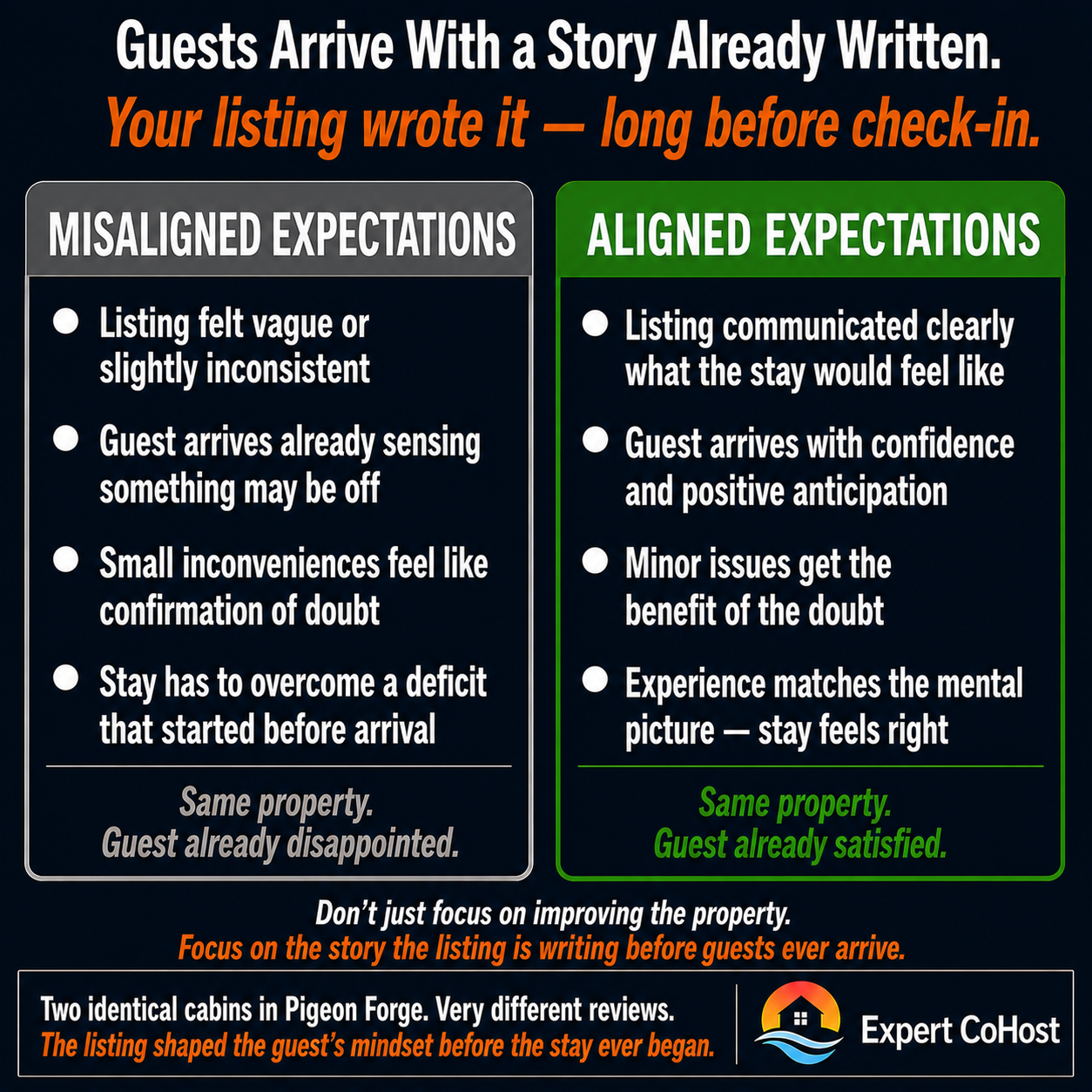
Interestingly, guests often experience the exact same property differently depending on what they expected beforehand.
A small inconvenience inside a high-trust, well-positioned experience may feel minor.
The same inconvenience inside a listing that already created uncertainty may feel much larger.
Because guests don’t only react to what happens.
They react to whether the experience matches the emotional expectations they already formed.
Emotional Expectations Matter More Than Technical Perfection
Most guests are not evaluating a property like professional inspectors.
They care deeply about:
- ease
- comfort
- predictability
- emotional reassurance
- feeling taken care of
A property doesn’t need to feel perfect.
But it does need to feel aligned with the expectations created before arrival.
When expectations and reality feel emotionally consistent, guests tend to interpret the stay more positively overall.
Misaligned Expectations Create Friction Quickly
Many operational issues actually begin before the guest ever arrives.
For example:
- luxury-style marketing paired with average execution
- vague listings that leave too much open to interpretation
- polished branding paired with inconsistent details
- emotionally warm presentation paired with transactional communication
These disconnects create friction because guests feel the experience they imagined is no longer matching reality.
And once that emotional mismatch begins, satisfaction becomes harder to maintain.
Strong Listings Create Better Guest Mindsets
High-performing listings often shape guest expectations intentionally.
They clearly communicate:
- what kind of experience the stay offers
- who the property is best for
- what guests should realistically expect
- how the stay will likely feel emotionally
That clarity creates alignment before arrival.
And alignment improves:
- communication
- guest comfort
- review quality
- patience during small issues
- overall satisfaction
often more than hosts realize.
The Real Shift
Most hosts focus heavily on improving the property itself.
But guest perception starts forming long before anyone walks through the door.
Because guests don’t arrive experiencing the stay objectively for the first time.
They arrive carrying a story they already created in their minds.
And the listing helped write that story long before check-in ever happened.