
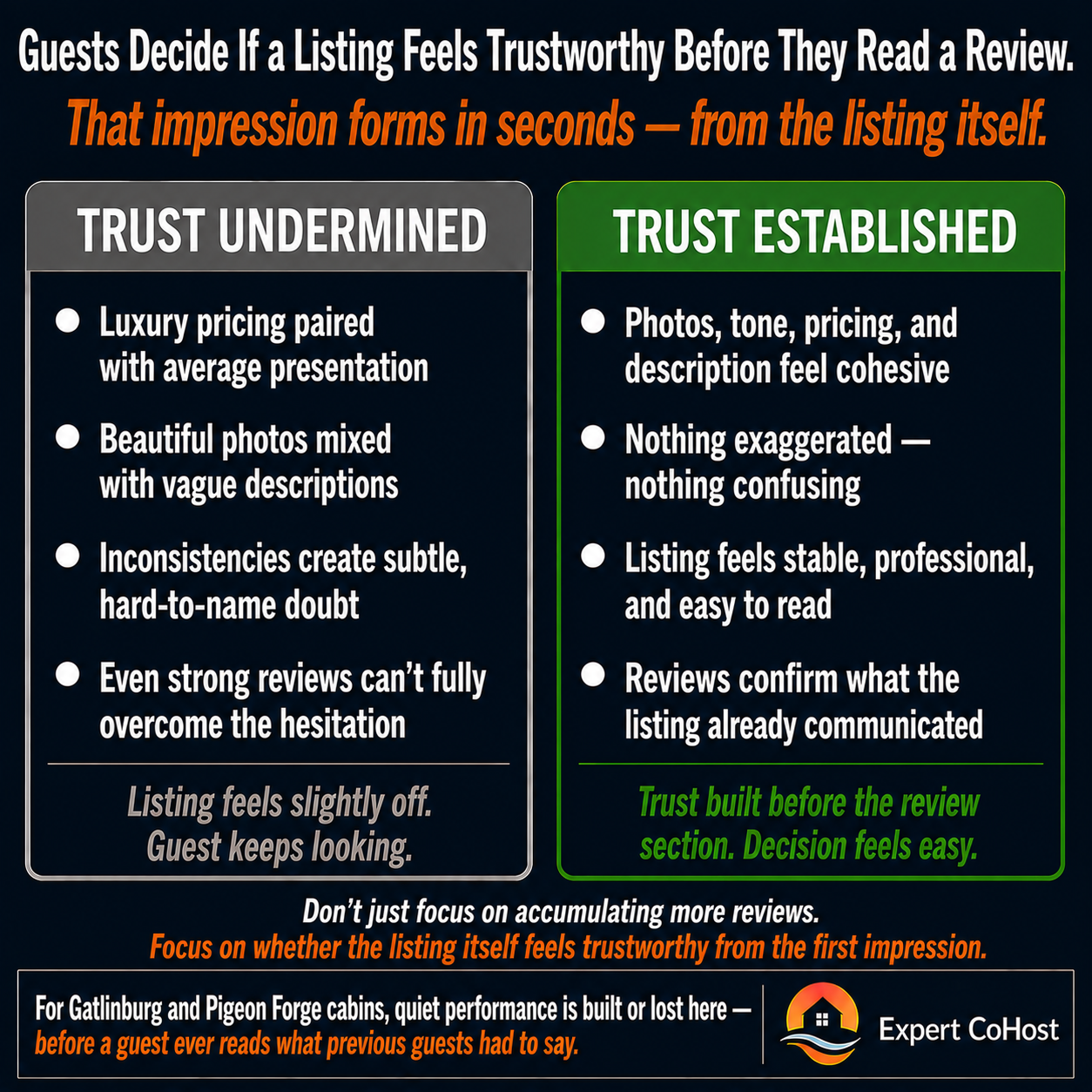
Most Airbnb hosts believe reviews are what create trust.
And reviews absolutely matter.
But something important usually happens before guests ever scroll that far.
They’ve already formed an impression.
Not a complete decision.
But a feeling.
A sense of whether the listing feels:
- reliable
- professional
- organized
- safe to book
That trust often begins forming within seconds.
Long before the reviews are fully evaluated.
Trust Starts Visually
Guests process listings emotionally before they process them logically.
The first few photos alone already communicate signals about:
- attention to detail
- professionalism
- consistency
- cleanliness
- care
Guests immediately notice things like:
- lighting
- clutter
- image quality
- visual flow
- presentation consistency
Not analytically.
Instinctively.
And those early impressions shape how trustworthy the property feels before guests consciously realize it.
Clarity Signals Reliability
Trust is closely connected to clarity.
When guests quickly understand:
- the layout
- sleeping arrangements
- atmosphere
- experience being offered
they feel more comfortable moving forward.
But confusion creates hesitation.
Even small uncertainties like:
- vague descriptions
- inconsistent photos
- unclear spaces
- missing information
can quietly weaken confidence.
Because uncertainty increases perceived risk.
Guests Use Emotional Shortcuts
Most booking decisions happen under limited attention.
Guests are often:
- browsing quickly
- comparing multiple listings
- evaluating options mentally and emotionally at the same time
Which means they rely heavily on emotional shortcuts.
They subconsciously ask:
- “Does this feel legitimate?”
- “Does this feel professionally managed?”
- “Would booking this feel safe?”
That emotional evaluation usually happens before detailed analysis begins.
Inconsistency Quietly Weakens Trust
One of the fastest ways to reduce trust is inconsistency.
For example:
- luxury pricing paired with average presentation
- beautiful photos mixed with poor-quality images
- polished branding paired with vague descriptions
- strong amenities paired with unclear communication
These mismatches create subtle doubt.
Guests may not consciously identify the issue.
But they still feel uncertainty.
And uncertainty slows booking decisions.
Reviews Often Reinforce Existing Impressions
Interestingly, reviews often strengthen a trust impression that already exists.
When guests already feel good about a listing, reviews become confirmation.
But when the listing itself feels unclear or inconsistent, even strong reviews may not fully overcome hesitation.
Because guests don’t evaluate reviews in isolation.
They interpret reviews through the emotional impression they already formed.
Trust Shapes Guest Behavior After Booking
Trust doesn’t only affect conversion.
It also affects the stay itself.
Guests who feel confident before booking often:
- communicate more positively
- arrive with clearer expectations
- interpret small issues more generously
- feel more emotionally comfortable during the stay
That changes the overall guest experience significantly.
Strong Listings Feel Intentionally Built
High-trust listings usually feel cohesive.
The:
- photos
- descriptions
- pricing
- tone
- positioning
all reinforce the same experience.
Nothing feels random.
Nothing feels exaggerated.
The listing feels stable.
And stability creates emotional reassurance.
The Real Shift
Most owners focus heavily on accumulating more reviews.
But trust often starts much earlier than that.
Because guests don’t wait until the review section to decide whether a listing feels trustworthy.
They begin making that decision the moment the listing starts shaping how they feel.