
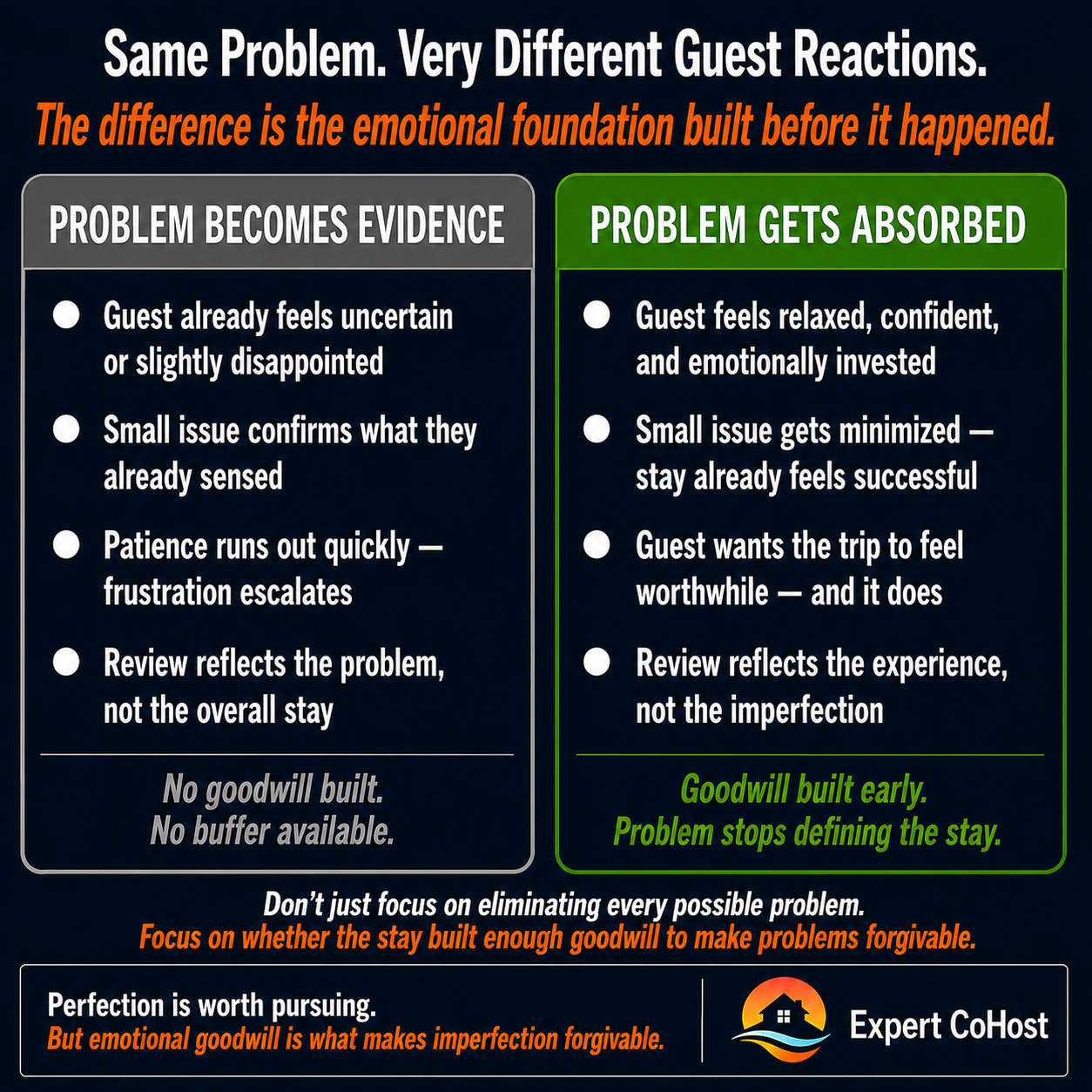
Some Airbnb guests become deeply frustrated over small problems.
Others experience similar issues and barely seem bothered at all.
A delayed response.
A minor maintenance issue.
A small inconvenience during the stay.
In one property, the guest becomes highly critical.
In another, the guest remains patient, understanding, and positive.
Why?
Because guests rarely evaluate problems in isolation.
They evaluate them through the emotional context of the entire experience.
Guests Don’t Judge Problems Objectively
Most hosts assume guest reactions are tied directly to the size of the issue itself.
But emotional perception matters far more than many owners realize.
The same operational problem can feel:
- minor
or - deeply frustrating
depending on how the guest already feels about the stay.
That emotional foundation changes everything.
Positive Emotional Momentum Changes Perception
When guests already feel:
- relaxed
- emotionally comfortable
- confident in the host
- happy with the experience overall
they naturally interpret small issues more generously.
The stay already feels successful emotionally.
And because of that, guests often protect the experience mentally instead of attacking it.
They don’t want the trip to feel ruined.
So small imperfections get absorbed more easily into the overall experience.
Trust Creates Patience
Trust changes how guests respond during stressful moments.
When guests believe:
- the host cares
- communication feels genuine
- the property was thoughtfully prepared
- the experience feels professionally handled
they become far more patient when problems occur.
Not because the issue disappears.
But because the guest emotionally believes:
“This will probably be handled appropriately.”
That reassurance reduces tension immediately.
Emotional Satisfaction Buffers Small Friction
Guests are surprisingly forgiving when the overall stay feels emotionally rewarding.
If the experience already feels:
- calming
- memorable
- comfortable
- meaningful
- aligned with expectations
small inconveniences lose emotional weight.
A guest enjoying:
- meaningful family time
- a peaceful atmosphere
- a relaxing weekend
- an emotionally restorative experience
often interprets minor issues very differently than a guest who already feels uncertain or disappointed.
Guests Want Their Booking Decision to Feel Correct
There’s also a psychological dynamic many hosts overlook.
People naturally want to feel they made good decisions.
Once guests emotionally invest in a stay, they often begin protecting that belief subconsciously.
They want the trip to feel successful.
Which means guests sometimes:
- minimize small issues mentally
- focus more heavily on positives
- interpret problems more generously
- maintain emotional loyalty to the experience overall
Especially when the stay already feels emotionally worthwhile.
Great Hospitality Builds Emotional Goodwill
One of the hidden advantages of strong hospitality is emotional goodwill.
Goodwill acts like a buffer.
When guests feel:
- welcomed
- emotionally cared for
- reassured
- thoughtfully hosted
the relationship becomes more resilient.
Problems stop feeling purely transactional.
Instead, guests evaluate the issue within the broader emotional experience of the stay.
That difference is enormous.
Perfection Isn’t Always What Guests Remember
Interestingly, many memorable stays are not technically flawless.
Guests may still remember:
- small inconveniences
- imperfect moments
- minor operational issues
But those details become secondary when the overall emotional experience feels strong.
What guests often remember most is:
- how relaxed they felt
- how easy the experience became
- how meaningful the trip felt overall
- whether the stay emotionally delivered what they hoped for
The Real Shift
Most hosts focus heavily on eliminating every possible imperfection.
And operational excellence absolutely matters.
But guest satisfaction is often shaped by something deeper than perfection alone.
Because the strongest Airbnb stays don’t just minimize problems.
They create enough emotional trust, comfort, and goodwill that small problems stop defining the experience altogether.