
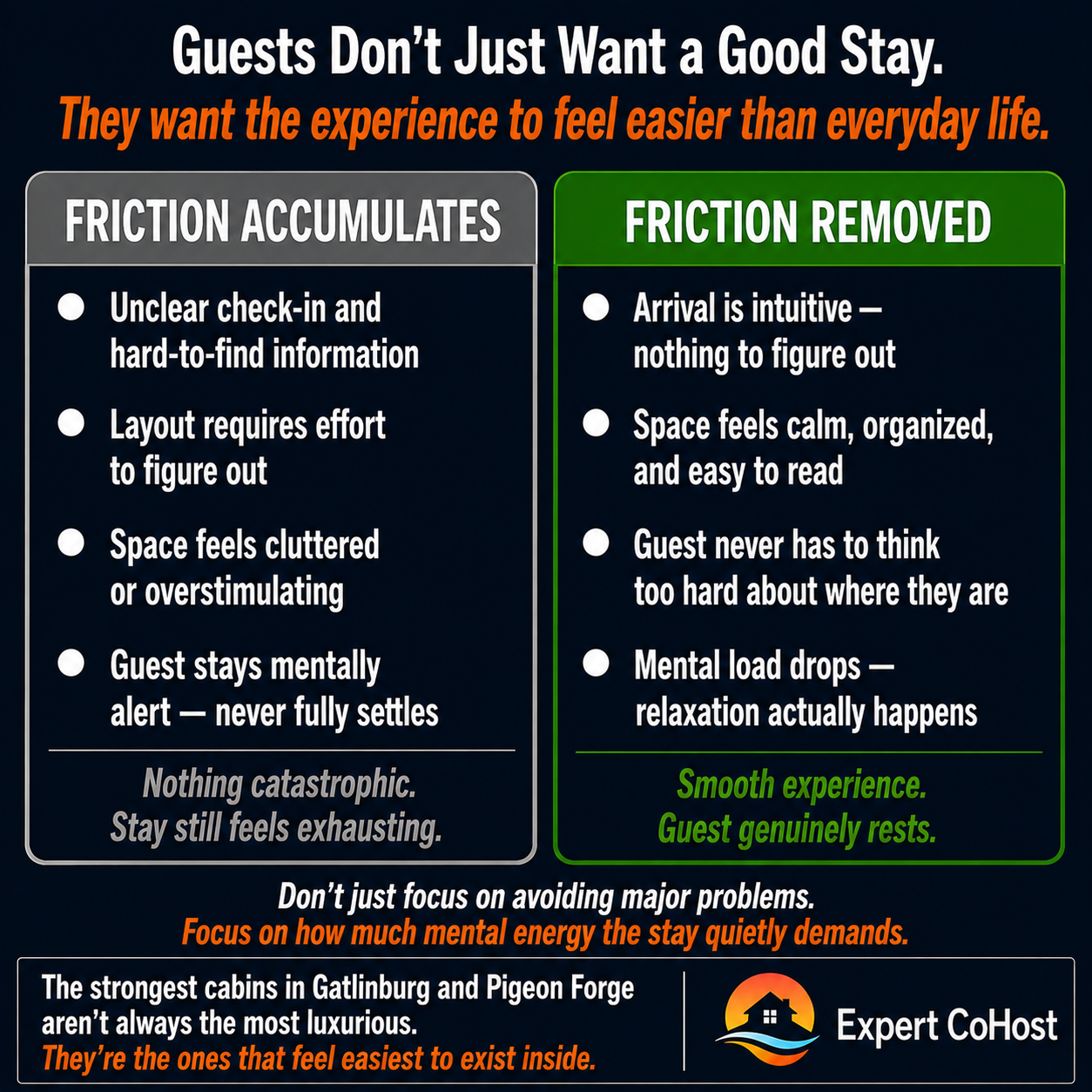
Most guests book an Airbnb expecting relief.
A break from routine.
A smoother environment.
A chance to relax mentally.
Even when the trip is short, guests usually hope the experience will feel easier than everyday life.
But sometimes, the opposite happens.
The stay quietly becomes more stressful than expected.
Not because of one major disaster.
But because the experience slowly starts demanding more emotional energy than guests thought they would need to spend.
Guests Are Usually Looking for Emotional Escape
Travel is rarely just logistical.
Guests are often seeking:
- rest
- calm
- connection
- simplicity
- emotional reset
That’s especially true in vacation rentals.
People don’t only want a place to sleep.
They want the experience itself to feel lighter.
Which means guests are highly sensitive to anything that creates unnecessary mental friction during the stay.
Stress Often Starts With Small Friction
Most stressful stays are not caused by catastrophic operational failures.
They’re caused by accumulation.
Small things like:
- unclear instructions
- difficult parking
- confusing layouts
- inconsistent communication
- hard-to-find items
- awkward check-in processes
- spaces that feel cluttered or overstimulating
may seem individually minor.
But together, they slowly increase cognitive load.
And cognitive load changes how the entire experience feels emotionally.
Guests Constantly Evaluate Ease
One of the biggest hidden drivers of satisfaction is how mentally easy the stay feels.
Guests notice:
- whether things feel intuitive
- whether the property feels calming
- whether routines feel smooth
- whether small tasks require effort or confusion
The easier the experience feels, the more emotionally relaxed guests become.
The harder the experience feels, the more emotionally alert they remain.
And emotional alertness is the opposite of relaxation.
Stress Builds Gradually During the Stay
Interestingly, guests often cannot identify one single problem causing dissatisfaction.
Because the stress usually develops slowly.
A confusing check-in creates mild tension.
An unclear setup creates more mental effort.
Small inconveniences continue adding friction.
Eventually, the stay stops feeling restorative.
Even though no single issue appears dramatic on its own.
This is why some guests leave feeling emotionally exhausted despite technically “good” accommodations.
Mental Friction Changes Guest Perception
Once guests feel mentally strained, their interpretation of the stay often changes.
They become:
- less patient
- more observant of flaws
- more emotionally sensitive
- quicker to feel disappointment
The property itself may not have changed.
But the guest’s emotional state has.
And emotional state strongly shapes perceived satisfaction.
Calm Experiences Often Feel More Valuable
Some properties create an immediate sense of ease.
Guests quickly feel:
- settled
- comfortable
- emotionally safe
- able to relax without thinking too much
That feeling creates tremendous perceived value.
Even if the property itself is not the most luxurious option available.
Because guests remember how mentally easy the stay felt.
Simplicity Is Part of Hospitality
Many owners think hospitality is mostly about:
- amenities
- design
- upgrades
- responsiveness
But great hospitality also removes unnecessary emotional effort.
The best stays often feel:
- intuitive
- smooth
- emotionally quiet
- easy to exist inside
Guests don’t need to constantly problem-solve throughout the experience.
And that absence of friction becomes part of what feels relaxing.
Strong Operations Reduce Emotional Load
High-performing short-term rentals are often excellent at reducing uncertainty.
The experience feels:
- predictable
- organized
- calming
- effortless to navigate
That operational simplicity creates emotional comfort.
Not because guests consciously notice every detail.
But because the stay never forces them into a stressed mental state.
The Real Shift
Most hosts focus heavily on avoiding major problems.
But guest satisfaction is often shaped more quietly than that.
Because stressful stays rarely become stressful all at once.
Instead, the experience slowly accumulates enough friction that guests stop feeling relaxed inside it.
And once the stay starts requiring more emotional energy than expected, the entire experience begins to feel heavier than guests originally hoped it would.