
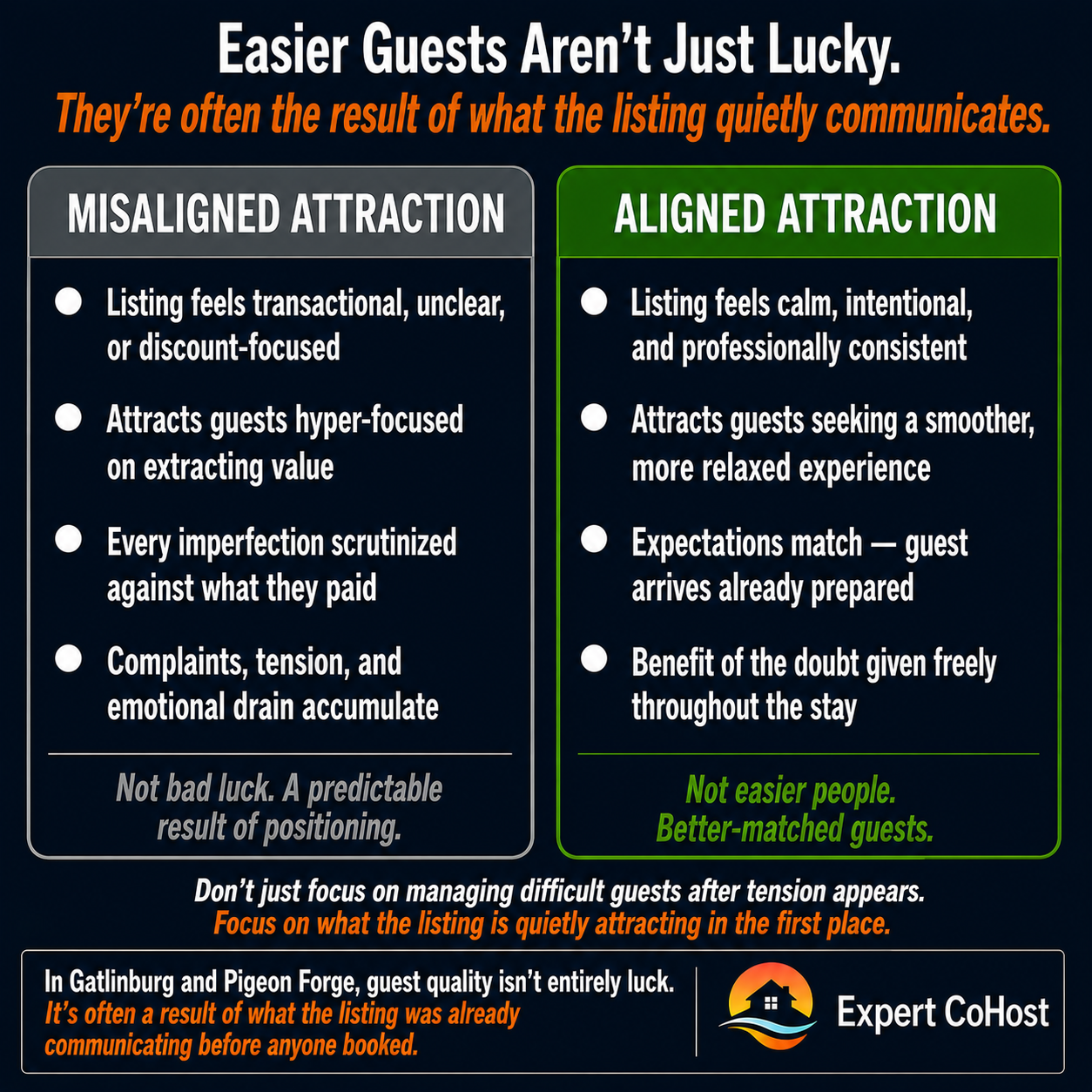
Some Airbnb hosts seem to attract respectful, easygoing guests consistently.
Their stays feel smoother.
Communication feels easier.
Problems escalate less often.
Reviews stay stronger over time.
Meanwhile, other hosts experience:
- constant guest tension
- frequent complaints
- unreasonable demands
- emotionally draining interactions
And often, the properties themselves are not dramatically different.
So why does this happen?
Because guest behavior is shaped long before check-in.
Guest Quality Is Not Entirely Random
Many hosts treat difficult guests as unavoidable bad luck.
And unpredictability is absolutely part of hospitality.
But guest behavior is not purely random.
Listings quietly influence:
- who feels emotionally attracted to the stay
- what expectations guests form beforehand
- how guests interpret the experience later
In other words, the business often helps shape the type of guest it attracts.
Positioning Filters Guest Psychology
Every listing communicates something emotionally.
Even unintentionally.
Guests subconsciously absorb signals about:
- the kind of experience being offered
- how the stay will feel
- what standards are being emphasized
- what type of traveler the property is designed for
Those signals influence who feels emotionally aligned with the booking.
For example, listings that feel:
- calm
- intentional
- professionally presented
- emotionally consistent
often attract guests seeking smoother experiences themselves.
Meanwhile, listings that feel:
- unclear
- overly transactional
- inconsistent
- aggressively sales-focused
can unintentionally attract more friction-oriented booking behavior.
Expectations Shape Guest Behavior
One of the strongest predictors of guest quality is expectation alignment.
Guests become more difficult when:
- reality feels unclear
- expectations feel mismatched
- emotional assumptions break down after arrival
But when guests clearly understand:
- the type of property
- the atmosphere
- the experience being offered
- the limitations of the stay
they usually arrive more emotionally prepared.
Prepared guests tend to create less tension.
Pricing Quietly Influences Guest Dynamics
Pricing doesn’t only affect revenue.
It also affects emotional behavior.
Extremely price-sensitive bookings sometimes create heightened expectations because guests become hyper-focused on extracting value from every detail.
That doesn’t mean lower-priced guests are inherently problematic.
But aggressive discount positioning can sometimes attract:
- more transactional mindsets
- higher emotional scrutiny
- stronger sensitivity to imperfections
Meanwhile, listings positioned around:
- experience
- atmosphere
- quality
- emotional clarity
often attract guests evaluating the stay more holistically.
Communication Sets Emotional Tone Early
Guests begin forming behavioral expectations during communication itself.
The tone of messaging influences:
- emotional trust
- perceived professionalism
- guest confidence
- emotional stability during the booking process
Clear, calm, emotionally steady communication tends to attract smoother interactions later.
Because guests mirror the emotional tone established early.
Emotionally Reactive Systems Create More Reactive Guests
Hosts under constant operational stress sometimes unknowingly create emotional instability inside the guest experience.
Examples include:
- inconsistent communication
- unclear instructions
- reactive problem-solving
- emotional urgency during issues
Guests often absorb that instability quickly.
And once emotional tension enters the stay, guest behavior may become more reactive too.
Strong Hospitality Creates Emotional Stability
The highest-performing hosts often create experiences that feel emotionally secure from the beginning.
Guests feel:
- informed
- reassured
- emotionally comfortable
- clear about expectations
- confident in the operation
That emotional stability reduces defensive behavior.
Guests become less likely to:
- search for problems
- escalate small issues
- react emotionally to imperfections
Because the experience already feels trustworthy overall.
Easier Guests Are Often the Result of Better Alignment
Interestingly, many “easy guests” are not necessarily easier people.
They’re simply better matched to the experience being offered.
The stay fits:
- their expectations
- emotional preferences
- travel style
- desired atmosphere
That alignment creates smoother emotional dynamics throughout the trip.
The Real Shift
Many hosts focus heavily on managing difficult guests after problems appear.
But the deeper leverage often exists much earlier than that.
In how the listing:
- positions the experience
- communicates expectations
- creates emotional trust
- attracts aligned travelers in the first place
Because in short-term rentals, guest quality is often influenced long before the guest ever walks through the door.