
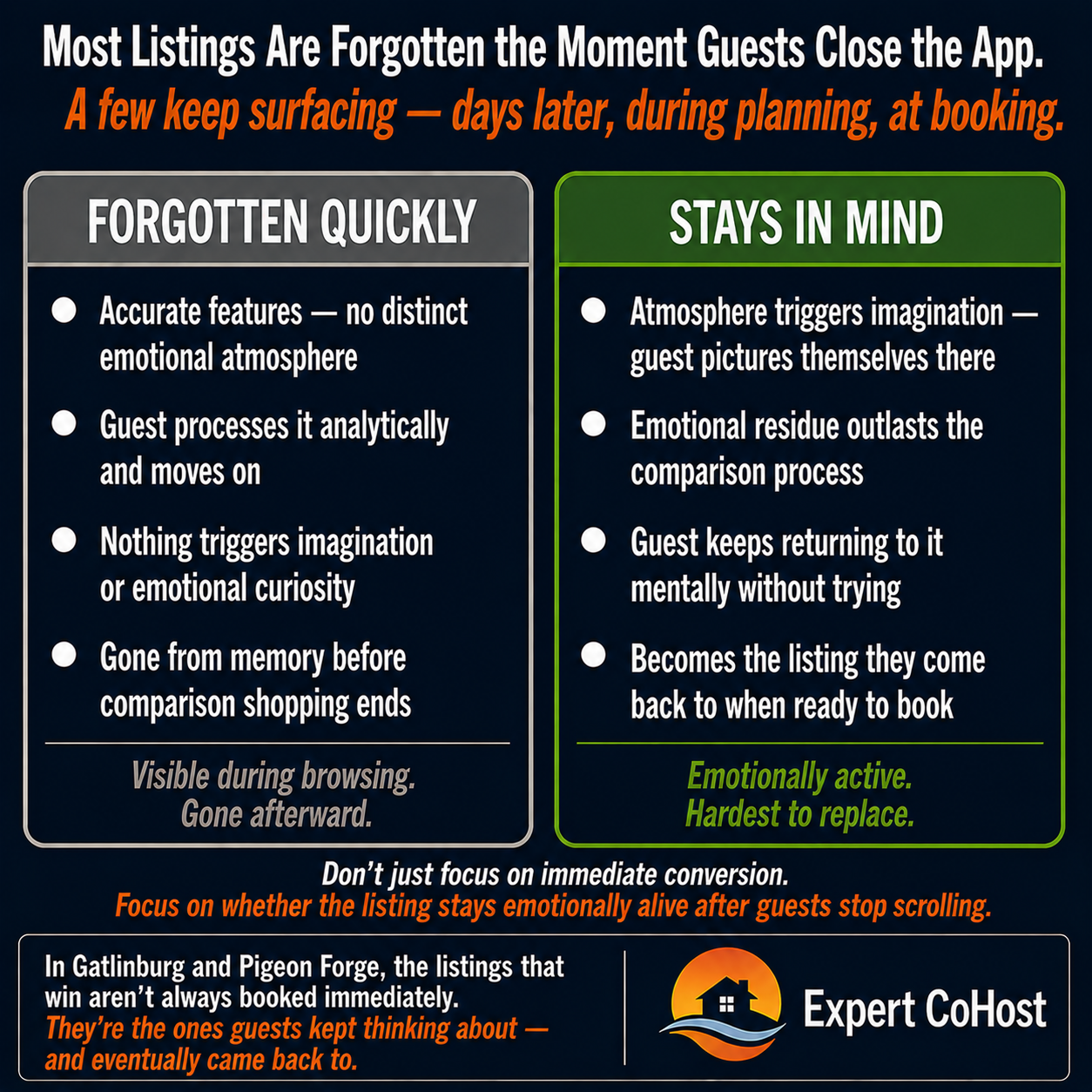
Most Airbnb listings are forgotten quickly.
Guests scroll past them, compare options, and move on without remembering much afterward.
But some listings linger.
Guests continue thinking about them:
- later that night
- days afterward
- while comparing other properties
- even during future trip planning
And often, those listings create emotional impact before a booking ever happens.
Emotional Memory Starts During Browsing
Guests do not only form memories during the stay itself.
Memory creation often begins much earlier — during the browsing process.
Some listings trigger:
- curiosity
- emotional imagination
- anticipation
- emotional attachment
The guest begins mentally revisiting the property long after closing the app.
That lingering attention matters enormously.
Certain Listings Feel Emotionally Distinct
One reason listings stay memorable is emotional differentiation.
Many listings feel interchangeable.
The same:
- design patterns
- photography styles
- descriptions
- positioning language
appear repeatedly across the platform.
But emotionally distinctive listings create stronger psychological imprint.
Guests remember how the listing felt emotionally — not just what it looked like technically.
Guests Imagine Themselves Inside the Experience
Strong listings trigger imagination quickly.
Guests begin picturing:
- waking up inside the property
- slow mornings during the trip
- emotional comfort during downtime
- how the environment may feel in real life
That imagination creates emotional involvement.
And emotional involvement strengthens memory dramatically.
Atmosphere Is Easier to Remember Than Features
Guests often forget technical details quickly.
But atmosphere lingers.
They remember:
- how calming the property felt
- whether the stay seemed emotionally restorative
- whether the environment felt emotionally aligned with the trip they wanted
Atmosphere creates emotional texture.
And emotional texture makes listings harder to forget.
Curiosity Creates Lasting Attention
Some listings quietly create emotional curiosity.
Guests feel:
- intrigued
- emotionally drawn in
- interested in experiencing the space firsthand
The property feels like more than accommodation.
It feels like an experience waiting to be entered.
That curiosity keeps the listing psychologically active in the guest’s mind.
Emotional Resonance Outlasts Comparison Shopping
Most browsing behavior is highly transactional.
Guests compare:
- pricing
- locations
- amenities
- reviews
But emotionally resonant listings interrupt that purely analytical process.
The guest starts emotionally connecting with the possibility of the stay itself.
And emotional connection lasts longer in memory than logical comparison.
Guests Often Save Emotionally, Not Rationally
Interestingly, guests frequently save listings not because they are ready to book immediately…
but because they do not want to lose the emotional possibility attached to the experience.
The listing represents:
- future relaxation
- aspiration
- emotional escape
- imagined comfort
That emotional significance keeps the property mentally relevant.
Strong Emotional Identity Creates Memorability
Listings that remain memorable usually communicate a very clear emotional identity.
Guests quickly understand:
- how the stay feels
- what emotional atmosphere it offers
- why the experience feels emotionally distinct
That clarity strengthens emotional recall.
Because emotionally coherent experiences are easier for the brain to retain.
The Real Shift
Most hosts focus heavily on immediate conversion.
But long-term attention matters too.
Because in crowded short-term rental markets, some listings create value long before the booking decision happens.
They stay emotionally alive in the guest’s mind.
And the listings guests keep thinking about later are often the ones that eventually become the hardest to forget — and the easiest to return to.