
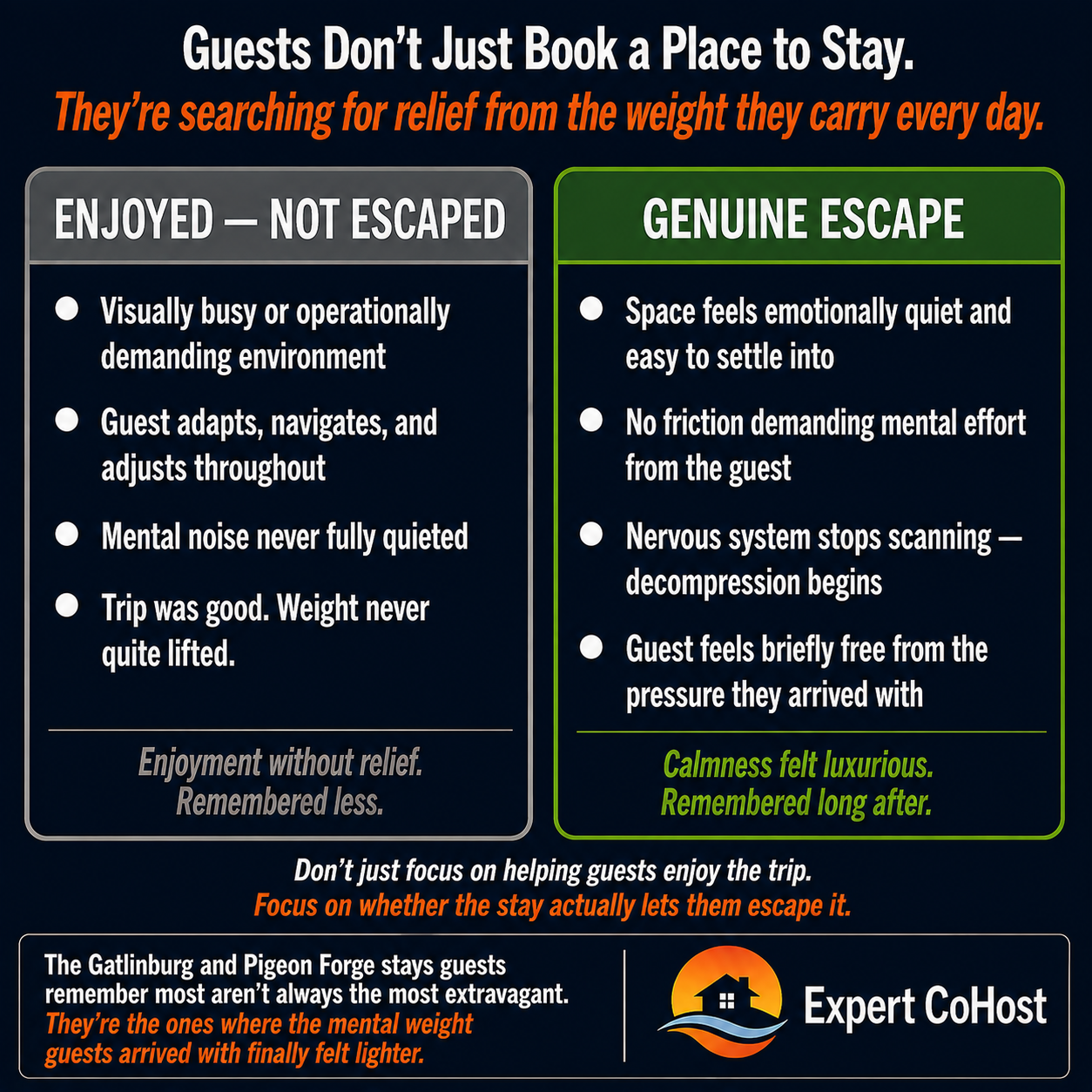
Some Airbnb stays feel different almost immediately.
Guests arrive and slowly begin feeling:
- quieter mentally
- calmer emotionally
- less emotionally tense
- more disconnected from daily pressure
The stay starts feeling like a genuine escape.
Not simply a place to sleep.
And that distinction matters deeply.
Guests Are Often Booking Emotional Relief
Most guests are not only searching for accommodation.
They are often searching for:
- recovery
- rest
- emotional decompression
- temporary distance from routine
- relief from mental overload
Even when they do not describe it directly.
The emotional purpose behind travel often runs much deeper than logistics alone.
A Real Escape Reduces Mental Noise
Many environments keep guests mentally alert.
They continue processing:
- stimulation
- clutter
- noise
- unpredictability
- emotional tension
But restorative stays reduce that mental activity.
The property feels:
- emotionally quiet
- visually calming
- easy to emotionally settle into
That reduction in mental noise creates genuine relaxation.
Guests Relax Faster in Emotionally Predictable Spaces
One hidden driver of emotional restoration is predictability.
Guests relax more easily when the environment feels:
- intuitive
- emotionally stable
- easy to navigate
- consistent in atmosphere
Nothing feels chaotic or emotionally demanding.
The nervous system stops scanning for stress signals constantly.
And that allows emotional decompression to begin.
Atmosphere Shapes Emotional Recovery
The atmosphere of a property affects guests more deeply than many hosts realize.
Things like:
- lighting
- spaciousness
- sound levels
- visual simplicity
- room flow
- emotional warmth
all shape whether the stay feels restorative or mentally stimulating.
Guests emotionally absorb environments long before they consciously analyze them.
Emotional Ease Feels Luxurious
Interestingly, guests often describe emotionally restorative stays as:
- luxurious
- peaceful
- high-end
- deeply comfortable
even when the property itself is relatively simple.
Because emotional ease feels valuable.
In a world filled with overstimulation, calmness itself becomes premium.
Guests Want to Stop Performing
Daily life often requires constant performance:
- decision-making
- productivity
- emotional management
- social pressure
Exceptional stays create temporary relief from that state.
Guests feel they can:
- slow down
- emotionally soften
- stop mentally managing everything constantly
That emotional freedom creates powerful attachment to the stay.
Restorative Stays Create Stronger Memory
Guests strongly remember environments where they genuinely relaxed.
Because true emotional recovery feels increasingly rare.
The guest remembers:
- how deeply they slept
- how mentally quiet mornings felt
- how emotionally calm the environment became
Those emotional memories often outlast technical details of the trip itself.
The Best Escapes Feel Effortless
One of the most important qualities of restorative hospitality is effortlessness.
Guests should not constantly adapt to:
- operational friction
- overstimulation
- confusing environments
- emotional inconsistency
The stay should quietly support emotional ease throughout the experience.
That invisible support creates the feeling of true escape.
The Real Shift
Most hosts focus heavily on helping guests enjoy the trip.
But the most emotionally valuable stays often provide something deeper than enjoyment alone.
They create relief.
Because the Airbnb stays guests remember most fondly are often not the most extravagant.
They’re the ones where guests briefly felt emotionally free from the pressure, noise, and mental weight they carried before arriving.