
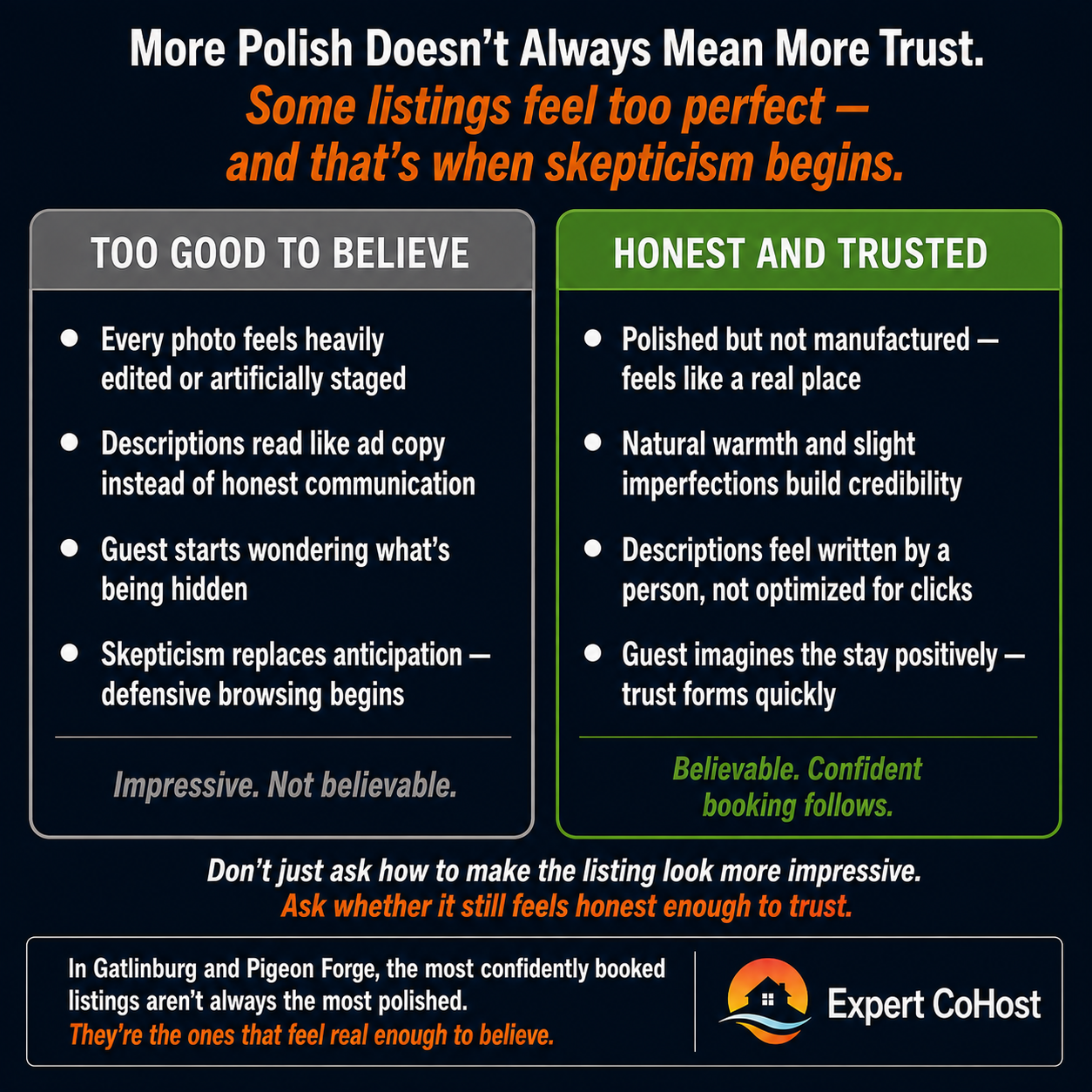
Most Airbnb hosts assume a more polished listing automatically creates more bookings.
Better photos.
Better staging.
Better editing.
Better presentation.
And often, that helps.
But there’s a point where polish can quietly create a different emotional reaction:
skepticism.
Some listings start feeling “too good to be true.”
And once that feeling appears, guests begin searching for reasons not to trust the stay.
Guests Are Constantly Assessing Risk
Booking an Airbnb always involves uncertainty.
Guests cannot fully verify:
- the actual atmosphere
- cleanliness
- comfort
- neighborhood feel
- noise levels
- how the property feels in person
So while browsing, guests naturally scan for emotional credibility.
They ask themselves:
“Does this feel believable?”
That question matters more than many hosts realize.
Perfection Can Trigger Suspicion
Ironically, listings that appear overly perfect sometimes reduce trust.
Especially when:
- every photo feels heavily edited
- the space looks unnaturally staged
- descriptions sound excessively sales-focused
- every sentence feels optimized instead of human
The listing starts feeling emotionally artificial.
Guests subconsciously wonder:
“What’s being hidden?”
Guests Trust Emotional Realism
Strong listings usually feel polished without feeling manufactured.
They feel:
- intentional
- believable
- emotionally grounded
- visually honest
Guests do not necessarily need perfection.
They need consistency between expectation and reality.
That emotional realism creates trust.
Over-Selling Creates Defensive Browsing
When listings push too aggressively toward:
- luxury signaling
- perfection claims
- exaggerated positioning
- excessive hype
guests often become more critical during evaluation.
Instead of imagining the stay positively, they begin looking for inconsistencies.
The listing unintentionally activates skepticism rather than anticipation.
Small Imperfections Often Increase Credibility
Interestingly, slight imperfections can make listings feel more trustworthy.
Things like:
- natural lighting variations
- lived-in warmth
- realistic room presentation
- emotionally authentic descriptions
help the property feel real.
And “real” often converts better emotionally than “flawless.”
Trust Comes From Coherence
Guests trust listings when everything feels emotionally aligned.
The:
- photos
- tone
- pricing
- reviews
- expectations
- atmosphere
should all feel consistent with one another.
But when the listing presentation feels dramatically elevated beyond what guests expect psychologically, trust weakens.
The experience starts feeling uncertain.
Guests Fear Emotional Disappointment
One hidden reason guests become skeptical of overly polished listings is emotional self-protection.
They worry about:
- being misled
- arriving disappointed
- paying premium pricing for average experiences
That fear creates hesitation during the booking process.
The guest emotionally pulls back.
Authenticity Feels Safer
Today’s guests are increasingly sensitive to emotional authenticity.
They respond well to listings that feel:
- confident without overselling
- beautiful without looking artificial
- premium without feeling performative
Because emotionally authentic listings reduce uncertainty.
And reduced uncertainty increases booking confidence.
The Real Shift
Many hosts focus on making their listing look impressive.
But guests are often asking a different question entirely:
“Does this feel believable?”
Because in short-term rentals, trust is not built through perfection alone.
It’s built when the listing feels emotionally honest enough that guests can confidently imagine the experience being real.