
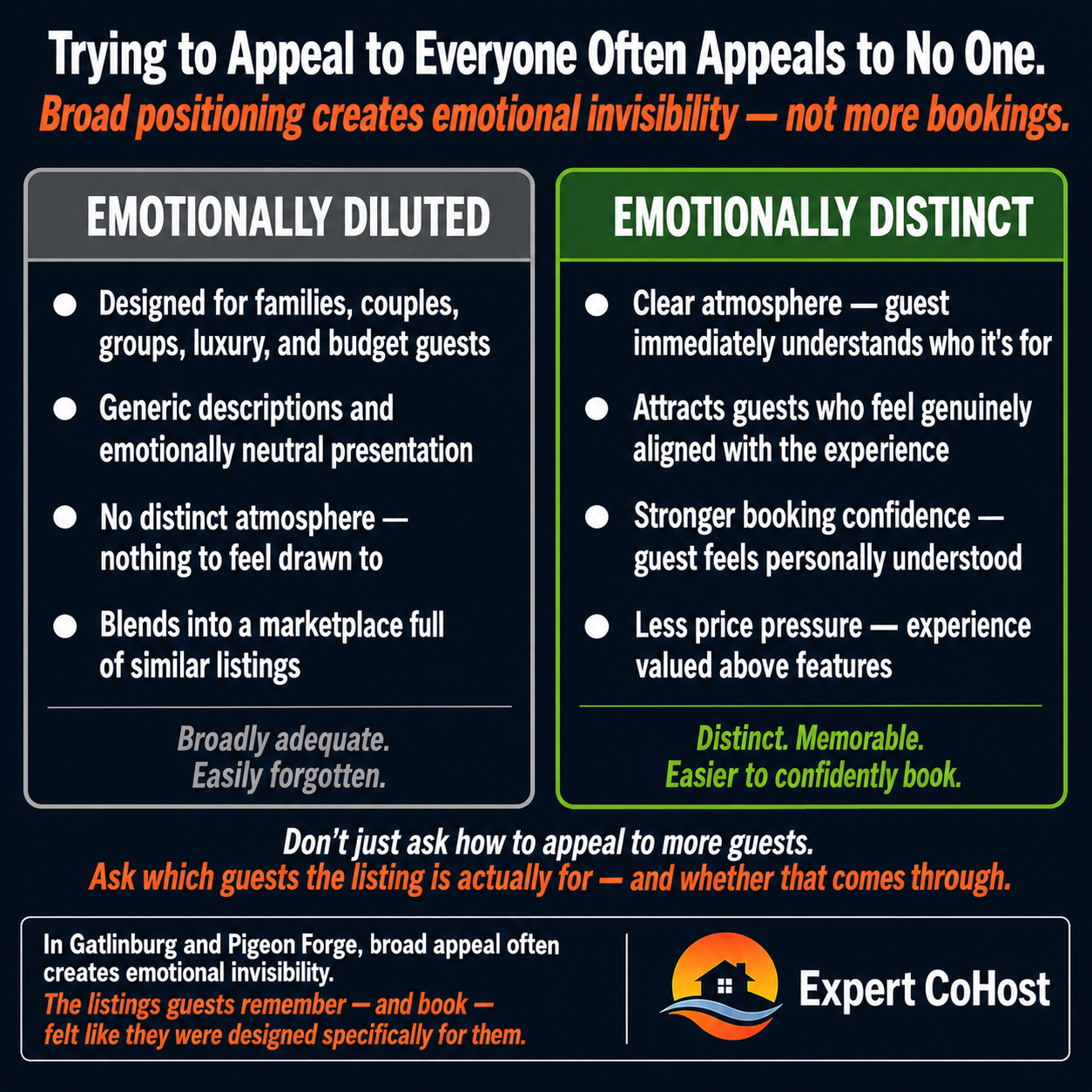
Most Airbnb hosts want broad appeal.
The logic seems reasonable.
If the property appeals to:
- families
- couples
- remote workers
- groups
- business travelers
- luxury guests
- budget guests
then theoretically, more people should book.
But in practice, something very different often happens.
The listing becomes emotionally diluted.
And emotionally diluted listings rarely stand out.
Broad Appeal Often Weakens Identity
Guests make booking decisions emotionally faster than many hosts realize.
They want to quickly understand:
- who the stay is for
- how the experience feels
- what emotional atmosphere the property offers
But listings trying to appeal to everyone often communicate none of those things clearly.
The experience feels generic instead of distinct.
Guests Respond to Clear Emotional Positioning
Strong listings usually have a recognizable emotional identity.
They feel:
- calm
- cozy
- social
- luxurious
- peaceful
- romantic
- design-focused
- family-oriented
Guests quickly understand the emotional experience being offered.
That clarity creates stronger connection.
Generic Listings Blend Into the Marketplace
One hidden problem with broad positioning is marketplace sameness.
When listings attempt to satisfy every possible guest type, they often rely on:
- generic descriptions
- safe design choices
- emotionally neutral presentation
- broad marketing language
The result feels familiar — but not memorable.
And forgettable listings struggle to create strong booking momentum.
Emotional Specificity Creates Attraction
Interestingly, stronger positioning can sometimes reduce total audience size…
while increasing conversion quality significantly.
Because emotionally specific listings attract guests who feel:
- aligned with the experience
- emotionally understood
- naturally drawn to the atmosphere
That alignment creates stronger booking confidence.
Trying to Avoid Exclusion Creates Weakness
Many hosts fear narrowing their positioning because they worry about excluding potential guests.
But trying not to exclude anyone often removes emotional magnetism entirely.
The listing becomes:
- harder to emotionally define
- less psychologically memorable
- weaker in guest imagination
Guests may understand the features…
but not the feeling.
Strong Listings Create Emotional Fit
Guests are not only searching for accommodation.
They are searching for experiences that match the emotional tone of their trip.
A listing that clearly communicates:
- relaxation
- intimacy
- adventure
- calmness
- connection
creates emotional fit more effectively than one trying to signal everything simultaneously.
Distinct Positioning Reduces Price Pressure
Emotionally distinct listings also compete less aggressively on price.
Why?
Because guests stop comparing purely on features alone.
Instead, they begin evaluating emotional experience.
And emotionally differentiated experiences naturally create stronger perceived value.
Memorable Properties Usually Feel Intentional
The best-performing listings often feel highly intentional.
Not necessarily expensive.
Intentional.
Guests sense:
- consistency
- emotional clarity
- design purpose
- experience alignment
That intentionality strengthens trust and memorability simultaneously.
The Real Shift
Most hosts ask:
“How do I appeal to more guests?”
But stronger performance often comes from a different question:
“How do I create a listing certain guests feel deeply drawn to?”
Because in crowded short-term rental markets, broad appeal often creates emotional invisibility.
And emotionally invisible listings rarely become the ones guests remember, trust, or feel excited to book.