
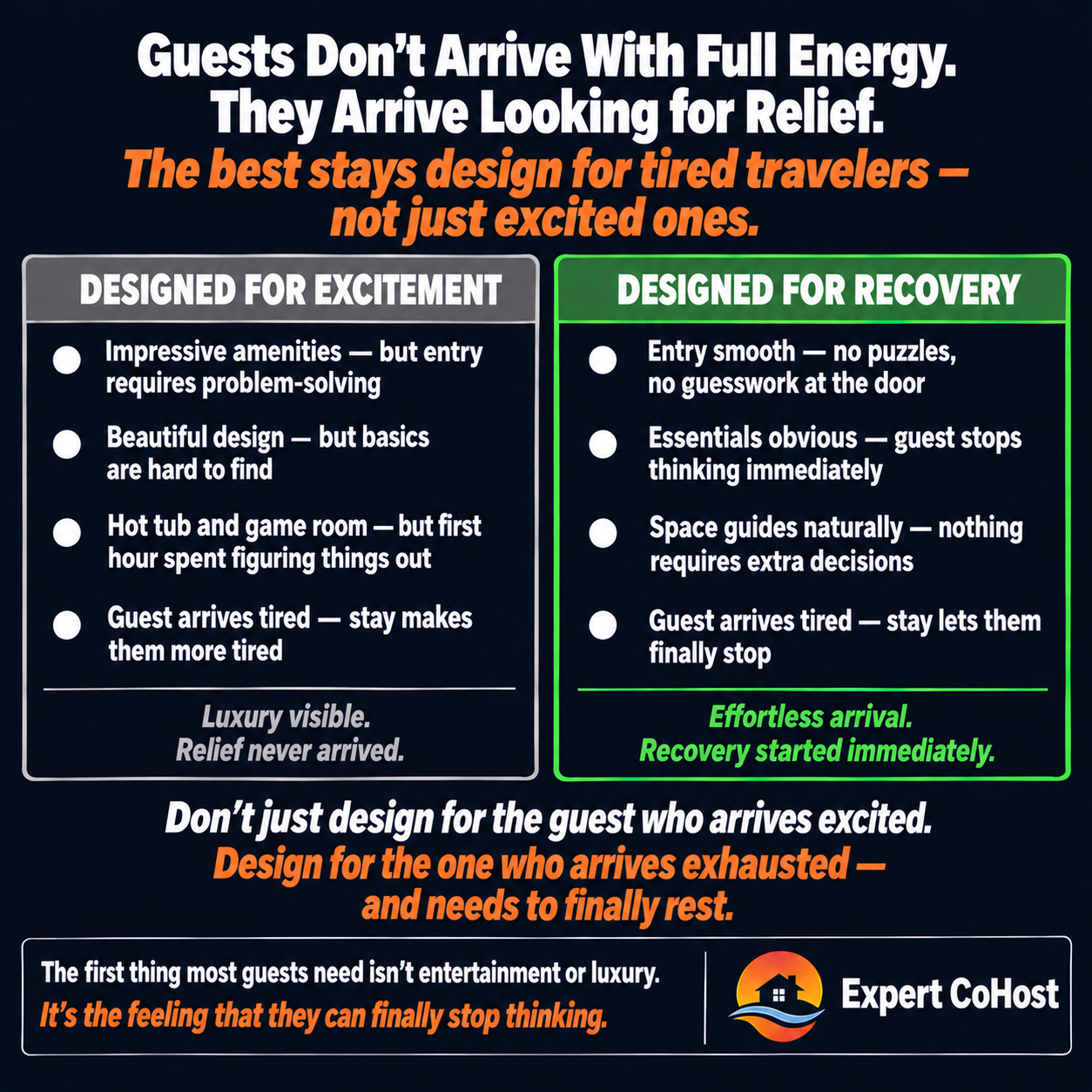
Most Airbnb hosts imagine guests arriving excited.
And many do.
But they're also arriving tired.
They've spent hours driving, navigating airports, waiting in lines, carrying luggage, managing children, or coordinating travel plans.
By the time they unlock your front door, they've already made hundreds of decisions that day.
The best hosts understand something important:
Their guests don't arrive with full mental energy.
They arrive looking for relief.
Hospitality Begins With Understanding How Guests Feel
When hosts think about guest experience, they often focus on what guests will notice.
Stylish furniture.
Luxury amenities.
Beautiful décor.
Those things certainly matter.
But before guests appreciate any of them, they want one simple feeling:
"I can finally relax."
That feeling doesn't come from expensive upgrades.
It comes from removing effort.
Tired People Experience Homes Differently
A guest who has been traveling all day isn't evaluating your property like a home designer.
They're asking practical questions.
How do I get inside?
Where can I put my bags?
Can I sit down?
Where's the bathroom?
How do I turn on the lights?
Is the Wi-Fi easy to find?
When people are mentally fatigued, even simple tasks require more effort.
A property that feels intuitive immediately feels more welcoming.
The First Few Minutes Set the Tone
After a long journey, guests don't want to solve puzzles.
They don't want to search for keys.
Decode complicated instructions.
Or wonder whether they're parked in the right place.
Every unnecessary decision delays the moment they finally feel settled.
Great hosts recognize this.
They make the first few minutes incredibly simple.
Not because guests can't figure things out.
Because they shouldn't have to.
Comfort Is About More Than Furniture
Hosts often associate comfort with soft beds and cozy sofas.
Guests define comfort more broadly.
Comfort also means:
- knowing exactly what to do
- finding essentials without searching
- understanding how things work
- feeling confident they're in the right place
- not worrying about making mistakes
These forms of comfort reduce mental load.
And that's exactly what tired travelers appreciate most.
Thoughtful Design Removes Decisions
One of the defining characteristics of excellent hospitality is that it reduces the number of choices guests need to make.
The towels are easy to find.
The thermostat is clearly labeled.
The coffee station is obvious.
Light switches make sense.
Charging outlets are where guests naturally expect them.
Nothing feels hidden.
Nothing requires guesswork.
The property quietly guides guests through their stay.
Luxury Doesn't Matter if Guests Feel Overwhelmed
It's easy to invest in impressive amenities.
A hot tub.
Designer furniture.
A premium entertainment system.
But those features lose much of their impact if guests spend their first evening trying to understand the property.
The most memorable luxury is often simplicity.
A stay that feels effortless allows guests to enjoy everything else you've provided.
Great Hosts Design for Recovery
Many guests book an Airbnb because they want a break from routine.
Not another challenge to manage.
The highest-performing hosts recognize that they're not simply providing accommodation.
They're creating a place where people can recover.
Recover from travel.
Recover from work.
Recover from busy schedules.
Every thoughtful decision that reduces stress helps guests reach that feeling sooner.
The Best Hospitality Often Goes Unnoticed
Guests rarely write reviews saying,
"The host thoughtfully reduced my cognitive load."
Instead, they say:
"Everything was easy."
"We felt comfortable right away."
"We'd definitely stay again."
Those simple comments often reflect dozens of invisible decisions the host made long before the guest arrived.
Final Thought
Great Airbnb hosts don't design only for excited travelers.
They design for tired ones.
Because the first thing most guests need isn't entertainment.
It isn't luxury.
It isn't even a beautiful view.
It's the feeling that they can finally stop thinking.
When a property removes effort instead of adding it, guests relax faster, settle in sooner, and enjoy the stay more deeply.
And in hospitality, helping people feel rested is often the greatest service you can provide.