
Many Airbnb stays go exactly as planned.
The space is clean.
Everything works.
Check-in is smooth.
Guests get what they booked.
And yet, something feels slightly off.
The review is positive—but not enthusiastic.
The stay was fine—but not memorable.
Nothing went wrong.
But it didn’t feel as good as it could have.
Delivery Isn’t the Same as Experience
From the host’s perspective, the stay was successful.
- no complaints
- no major issues
- expectations were met
But guests don’t evaluate stays based on execution alone.
They evaluate based on how the experience felt.
And that feeling is shaped before they even arrive.
Expectations Set the Baseline
Every guest arrives with a mental picture of the stay.
That picture comes from:
- listing photos
- descriptions
- tone of communication
- assumptions based on similar properties
This becomes their reference point.
Not what you deliver.
But what they expect.
Where the Gap Happens
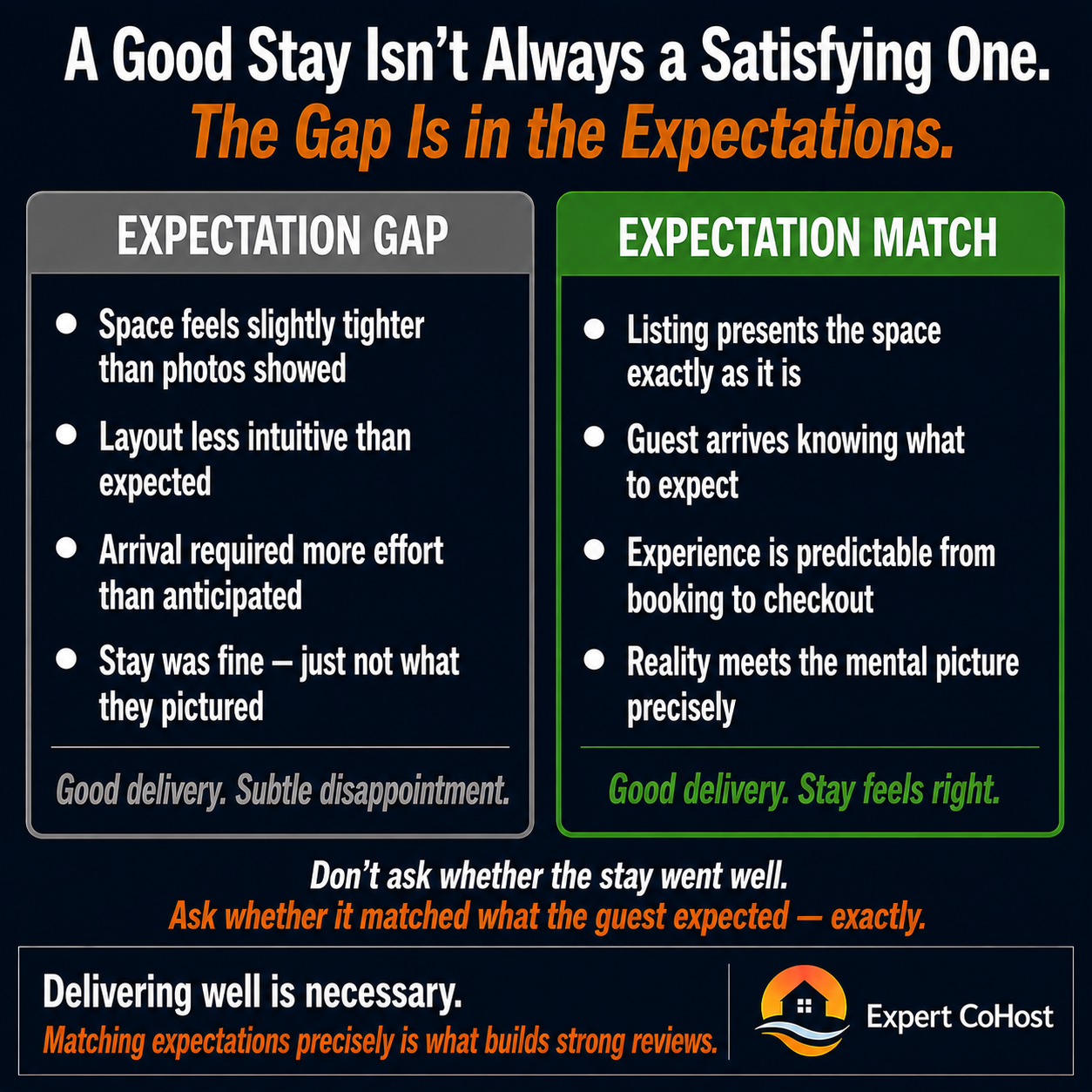
When the actual stay doesn’t match that mental picture perfectly, a gap appears.
Even if the difference is small.
For example:
- the space feels slightly tighter than expected
- the layout is less intuitive
- the lighting feels different than the photos
- the experience requires more effort than anticipated
Individually, these aren’t problems.
But together, they create subtle disappointment.
Why This Is Hard to Detect
Expectation gaps rarely show up as complaints.
Guests:
- adapt
- adjust
- move on
From the host’s perspective, everything looks fine.
But the signal shows up later:
- less enthusiastic reviews
- lower likelihood of strong recommendations
- reduced emotional impact
The stay was good.
It just wasn’t as good as expected.
“Better” Doesn’t Always Fix It
Many owners try to solve this by improving the property:
- upgrading furniture
- adding amenities
- enhancing decor
But if expectations remain misaligned, the issue persists.
Because the problem isn’t quality.
It’s alignment.
What Strong Listings Do Differently
High-performing listings don’t just deliver well.
They match expectations precisely.
They:
- present the space clearly
- avoid overstating features
- make the experience predictable
- reduce interpretation
Guests arrive knowing what to expect.
And when reality matches that expectation, the experience feels smooth—and satisfying.
This Connects to the Bigger Pattern
Across high-performing Airbnbs, strong results don’t come from avoiding problems alone.
They come from:
- clear positioning
- confident decision-making
- aligned expectations
- consistent experience
When those pieces line up, reviews strengthen naturally.
Not because the stay was perfect.
Because it felt right.
The Real Shift
Most owners ask:
“Did the stay go well?”
A better question is:
“Did the experience match what the guest expected—exactly?”
Because guests don’t remember what was delivered.
They remember how it felt relative to what they thought it would be.
And that difference is what defines the experience.