
Some Airbnb guests do more than simply enjoy a stay.
They become emotionally attached to it.
They:
- return repeatedly
- recommend the property enthusiastically
- compare future stays against it
- feel personally connected to the experience itself
And interestingly, this kind of loyalty is rarely created by amenities alone.
It usually comes from something deeper:
emotional experience.
Most Guests Forget Stays Quickly
Many short-term rental stays are transactional.
The guest:
- books the property
- enjoys the trip
- leaves a review
- moves on emotionally afterward
Even positive experiences are often forgotten surprisingly fast.
But some stays create emotional residue that lingers long after checkout.
That emotional memory changes how guests relate to the property itself.
Emotional Loyalty Is Different From Satisfaction
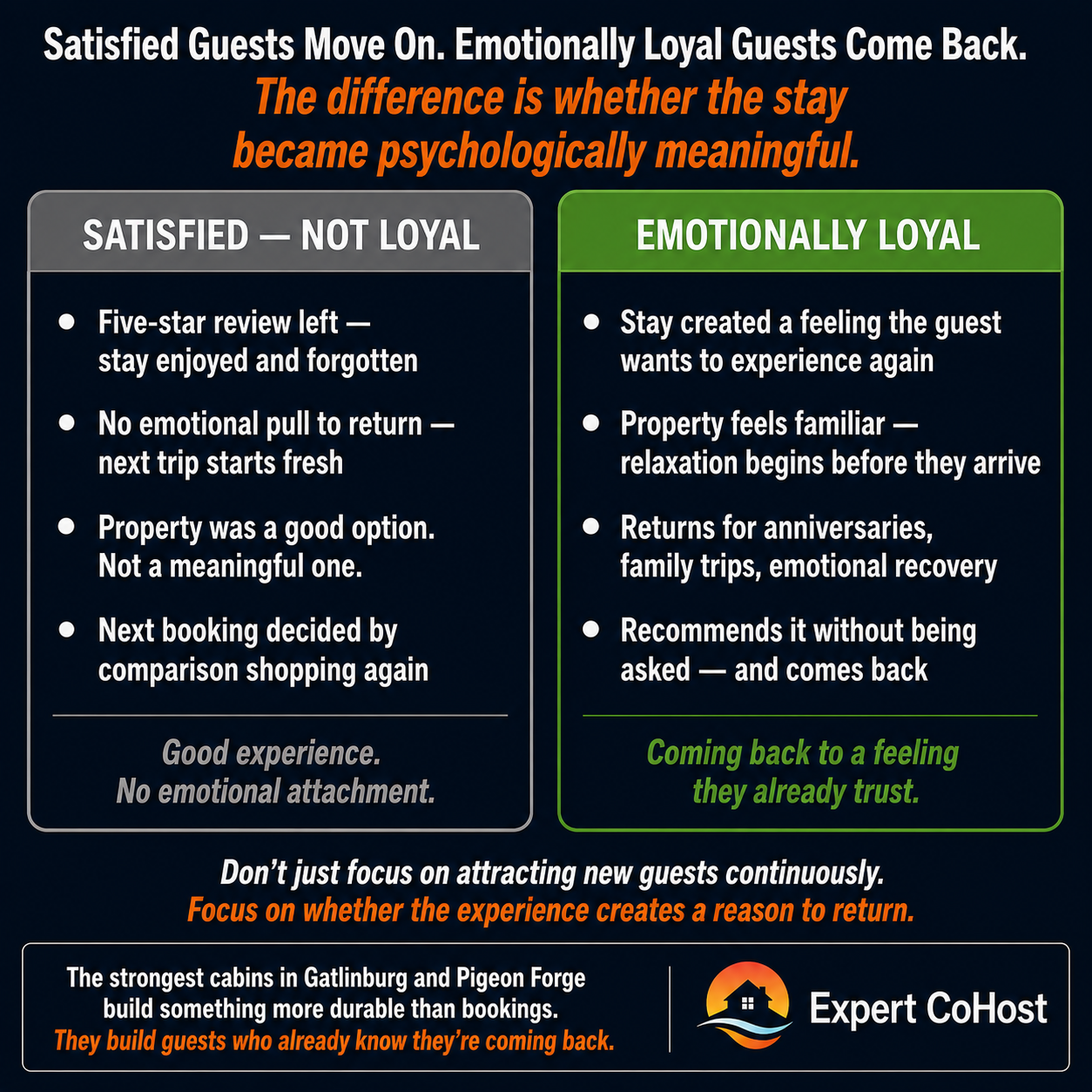
A satisfied guest is not always a loyal guest.
Guests can leave:
- positive reviews
- five-star ratings
- kind feedback
while still feeling no emotional pull to return.
Emotional loyalty happens when the property becomes psychologically meaningful to the guest.
The stay begins representing:
- comfort
- familiarity
- emotional relief
- connection
- personal routines
- emotionally restorative experiences
That emotional association creates attachment.
Guests Become Loyal to Feelings, Not Just Spaces
One of the most overlooked realities in hospitality is that guests often return for emotional reasons more than practical ones.
They return because the property made them feel:
- calmer
- safer
- more grounded
- more connected
- emotionally comfortable
The property becomes linked to an emotional state they want to experience again.
That emotional familiarity becomes incredibly powerful over time.
Familiarity Reduces Emotional Friction
Travel naturally creates uncertainty.
Guests constantly adapt to:
- unfamiliar environments
- changing routines
- new logistics
- emotional unpredictability
But returning to a familiar property reduces that psychological effort dramatically.
Guests already know:
- how the stay feels
- what to expect emotionally
- how their routines fit into the space
- how quickly they can relax there
That emotional predictability creates comfort.
And comfort strengthens loyalty.
Emotionally Consistent Experiences Build Trust
Guests become emotionally loyal when the experience feels consistently reliable over time.
Not just operationally reliable.
Emotionally reliable.
The stay repeatedly delivers:
- calmness
- ease
- emotional comfort
- familiarity
- low-friction hospitality
That consistency creates emotional security.
And emotional security often drives long-term guest attachment more strongly than novelty does.
Atmosphere Creates Emotional Attachment
Properties that create emotional loyalty usually have strong atmosphere.
Guests remember:
- quiet mornings
- peaceful evenings
- how the space felt during downtime
- how easily they emotionally settled into the stay
Those emotional moments become associated with the property itself.
Over time, the guest stops viewing the property as “a rental.”
It begins feeling emotionally personal.
Emotional Loyalty Increases Perceived Value
Emotionally loyal guests often become less price-sensitive over time.
Not because pricing stops mattering.
But because emotional familiarity increases perceived value.
Guests know:
- the emotional experience feels dependable
- the environment supports relaxation
- the stay consistently delivers emotional comfort
That confidence reduces comparison shopping behavior significantly.
Hospitality That Feels Human Creates Stronger Loyalty
Guests often become emotionally attached to stays that feel:
- warm
- thoughtful
- emotionally intentional
- personally welcoming without feeling intrusive
Small moments matter:
- thoughtful communication
- emotionally calm environments
- intuitive experiences
- hospitality that feels genuinely considered
These details create emotional connection beyond functionality alone.
Emotional Loyalty Compounds Over Time
One powerful aspect of emotional loyalty is compounding.
The more positive emotional experiences guests associate with the property, the stronger the attachment often becomes.
The stay becomes connected to:
- family memories
- anniversaries
- vacations
- emotional recovery
- meaningful personal experiences
At that point, guests are no longer simply booking accommodation.
They are returning to a feeling they already trust emotionally.
The Real Shift
Most hosts focus heavily on attracting new guests constantly.
But emotionally loyal guests create a very different kind of value.
Because in short-term rentals, the strongest guest relationships are often not built through aggressive marketing or endless optimization.
They’re built by consistently creating emotional experiences guests quietly want to return to again and again.